 Susan Park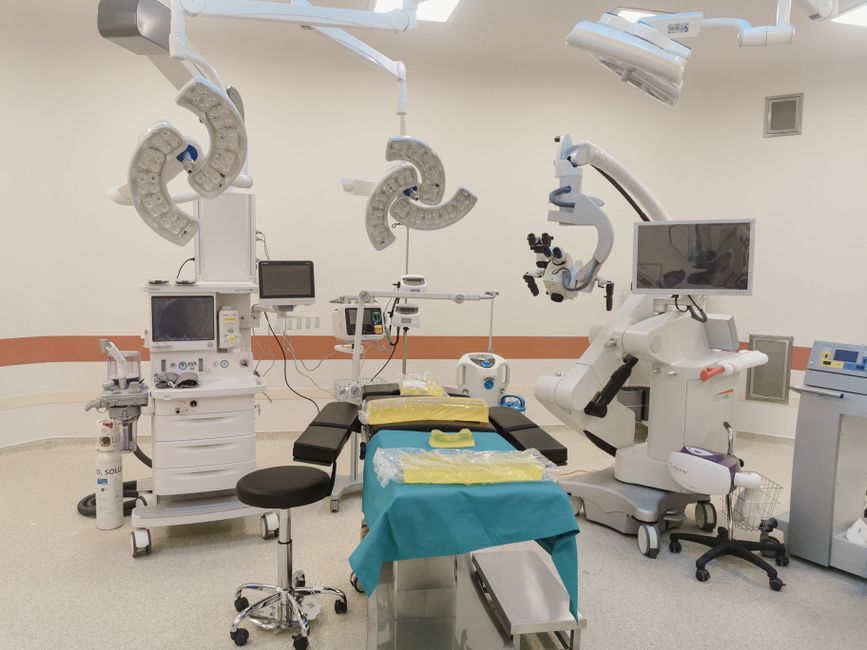
More than 3.8 million cataract surgeries are performed in the United States every year, making it the single most common surgical procedure Medicare pays for. That number alone should tell you something: if you’re sitting with a diagnosis and wondering whether your Medicare card covers this, you are absolutely not alone, and the answer is almost certainly yes.
But “yes” comes with details, and those details matter when you’re looking at an out-of-pocket bill. I’ve watched people walk away from a surgeon’s office confused about what Medicare actually agreed to cover versus what the hospital billed, and honestly, the gap can catch you off guard if you’re not prepared. So let me walk through this the way I would with anyone who sat down across from me.
The short version: Medicare Part B (your outpatient medical insurance) covers cataract surgery when it’s medically necessary, including one pair of eyeglasses or one set of contact lenses after your first surgery. The longer version involves your deductible, coinsurance, the type of lens implanted, and whether your surgeon participates in Medicare. All of that changes what you’ll actually pay.
- Medicare Part B covers medically necessary cataract surgery, typically after you meet your annual deductible.
- You pay 20% of the Medicare-approved amount after the deductible; costs vary by surgeon and facility.
- Standard monofocal lens implants are covered; premium lenses (toric, multifocal) cost extra out of pocket.
- Medicare covers one pair of eyeglasses or contacts after your first cataract surgery.
- Medigap or Medicare Advantage plans can significantly reduce or eliminate your 20% coinsurance share.
What Medicare Actually Covers (and What It Doesn’t)
Part B covers the surgery itself, the surgeon’s fee, the anesthesiologist, and the facility charge, whether that’s a hospital outpatient department or an ambulatory surgical center (ASC, which is usually a freestanding surgery clinic). It also covers the standard intraocular lens, or IOL, that gets implanted to replace the clouded natural lens the surgeon removes. That standard IOL is a monofocal lens, meaning it corrects your vision at one fixed distance (usually distance vision), and you’ll likely still need reading glasses afterward.
Here’s where a lot of people get surprised. If you want a premium IOL, like a multifocal lens that can reduce your dependence on glasses at multiple distances, or a toric lens that also corrects astigmatism, Medicare will cover the part of that lens equivalent to a standard monofocal. The upgrade cost, sometimes called a “balance bill” or a “facility charge for a non-covered upgrade,” comes out of your pocket. That upgrade can run anywhere from roughly $1,500 to over $3,000 per eye depending on the lens type and the surgeon’s practice. I’ve seen patients genuinely blindsided by this charge because nobody explained it to them before the day of surgery. Ask before you consent to anything.
The one pair of eyeglasses or contacts benefit after surgery is real, but it only applies to your first cataract surgery per the current Medicare guidelines. Per Medicare.gov, the frames must be from a supplier who participates in Medicare, and even then Medicare’s covered amount for the frames themselves is modest. You’ll often still pay something. Keep that in mind if your ophthalmologist’s office sells frames at retail prices.
What You’ll Actually Pay: The Numbers Broken Down
Helpful resource: OMRON Platinum Blood Pressure Monitor Upper Arm is a top-rated option for this. (As an Amazon Associate this site earns from qualifying purchases.)
As of August 2026, Medicare Part B has an annual deductible (check Medicare.gov for the current year’s figure, since it adjusts annually). Once you’ve met that, Part B pays 80% of the Medicare-approved amount and you pay the remaining 20%. There’s no cap on that 20% under Original Medicare alone, which is why a Medigap policy (also called Medicare Supplement insurance) can make a real difference.
Here’s a realistic cost comparison depending on your coverage situation:
| Coverage Type | What You Pay for Standard Cataract Surgery (per eye) | Premium Lens Upgrade | Notes |
|---|---|---|---|
| Original Medicare (Part B only) | ~20% of approved amount, plus any deductible | Full upgrade cost out of pocket | No cap on 20% coinsurance |
| Original Medicare + Medigap Plan G | Near $0 after annual deductible | Full upgrade cost out of pocket | Plan G covers the 20% coinsurance |
| Original Medicare + Medigap Plan N | Small copay possible | Full upgrade cost out of pocket | Plan N covers most of the 20% with some limits |
| Medicare Advantage (Part C) | Varies by plan; often a copay of $150-$400 per eye | Varies; some plans have allowances | Check your specific plan’s Summary of Benefits |
| Medicare Advantage + premium lens | Same copay for base surgery | Usually still out of pocket | Confirm with your plan before surgery |
I want to be honest: the specific dollar amounts for the Medicare-approved rate on cataract surgery are not publicly listed in one easy place. The Centers for Medicare & Medicaid Services (CMS) sets physician fee schedule amounts by CPT code and by geographic region, and they change annually. Your surgeon’s billing office can tell you the exact expected Medicare-approved rate for your zip code. Ask them to run a cost estimate before your surgery date. They do this regularly and it’s a normal request.
These figures reflect typical ranges for the base surgery with a standard lens. Your actual numbers will differ based on your region, whether you use a hospital outpatient department (which generally costs more than an ASC under Medicare’s fee schedules), and whether you’ve already met your annual deductible.
Two Real Scenarios Worth Walking Through
Margaret, 73, Original Medicare only, standard lens: Margaret had been putting off her right eye surgery for over a year because she wasn’t sure what it would cost. She’d already met her Part B deductible from a separate procedure earlier that year. Her surgeon’s office billed Medicare, Medicare approved roughly $1,600 for the total facility and physician fee, paid $1,280, and Margaret owed $320. She paid it, healed well, and scheduled the second eye three months later.
Robert, 68, Medigap Plan G, wanted toric lens: Robert’s right eye had significant astigmatism and he really wanted the toric IOL. His surgeon quoted the lens upgrade at $1,850 for that eye. Medicare covered the base surgery cost and his Medigap Plan G picked up the 20% coinsurance. But the $1,850 lens upgrade was entirely his responsibility. He decided it was worth it for better uncorrected distance vision. He paid it out of pocket. That’s a completely legitimate choice. Just make sure it’s an informed one.
Louise, 71, Medicare Advantage HMO: Louise’s plan required her to use an in-network ophthalmologist and get a referral from her primary care doctor first. She didn’t know about the referral requirement. She called the surgeon directly, booked the surgery, and almost ended up with a denied claim. Her plan’s member services line caught the issue in time and walked her through getting the retroactive referral approved. Close call. Always call your Medicare Advantage plan before scheduling any surgical procedure.
The Lens Choice Decision (More Important Than Most People Realize)
I’ll be direct here: I generally tell people not to let a surgeon upsell them on a premium lens without sitting with that decision for at least a few days. A standard monofocal IOL produces excellent vision outcomes for the vast majority of people. The evidence that multifocal IOLs reduce overall glasses dependence is real, but so is the evidence that a small percentage of patients experience halos, glare, or reduced contrast sensitivity with multifocal lenses that they don’t with monofocals. A 2021 review published in the journal Ophthalmology found that while multifocal IOLs improved spectacle independence compared to monofocals, patient satisfaction scores were not always higher because of those visual side effects.
If you have significant astigmatism, a toric lens is often genuinely worth discussing. If you’re very motivated to be free of reading glasses, a multifocal or extended depth-of-focus lens might suit you. But go in knowing that Medicare won’t cover the upgrade cost, the price is often $1,500 to $3,000+ per eye above what Medicare pays, and the visual tradeoffs are real for some patients. It’s a personal decision, and a good surgeon will give you time to make it without pressure.
Before Surgery: Four Things to Verify
The logistics trip people up more than the medical part. Here’s what I walk through with anyone before their surgery date:
- Confirm your surgeon is a Medicare-participating provider (not just “Medicare-accepting.” Participating means they’ve agreed to accept Medicare’s approved amount as payment in full, which protects you from excess charges in most states).
- Ask the facility whether it’s classified as a hospital outpatient department or an ambulatory surgical center. The cost-sharing is different under Medicare’s rules.
- Call your Medigap or Medicare Advantage plan and confirm the surgery is covered before the date. Get a reference number for that call.
- Ask the surgeon’s billing team to give you an itemized cost estimate in writing, including any lens upgrade charges, before you sign the consent form.
That fourth one sounds obvious but in my experience it’s the step people skip most often. The form goes in front of you, everything feels rushed, and you sign. Ask for the estimate the week before. Read it.
Sources
- Medicare.gov: Official Medicare coverage details for cataract surgery and eyewear benefits, current as of 2026
- Centers for Medicare & Medicaid Services (CMS): Physician Fee Schedule and Outpatient Prospective Payment System data
- American Academy of Ophthalmology (2026): Cataract surgery statistics and IOL outcomes guidance
- Ophthalmology journal (2021): Systematic review of monofocal vs. multifocal IOL patient satisfaction outcomes
- Kaiser Family Foundation: Medicare beneficiary cost-sharing and Medigap coverage analysis
Photo: Mehmet Turgut Kirkgoz via Pexels
This article is for informational purposes only. Medicare rules change annually. Always verify current plan details at Medicare.gov or by calling 1-800-MEDICARE (1-800-633-4227). This site does not sell insurance or recommend specific plans.
Recommended Resources
Disclosure: As an Amazon Associate, we earn a small commission from qualifying purchases at no extra cost to you. We only recommend products that genuinely support the topics covered in this article.
- Medicare For Dummies (~$22), The definitive consumer guide to Medicare, enrollment windows, Part A/B/C/D, and supplement plans.
- Get What’s Yours for Medicare (~$17), Maximize your Medicare benefits and minimize out-of-pocket costs. Covers Part D drug coverage gaps and Medigap in depth.